
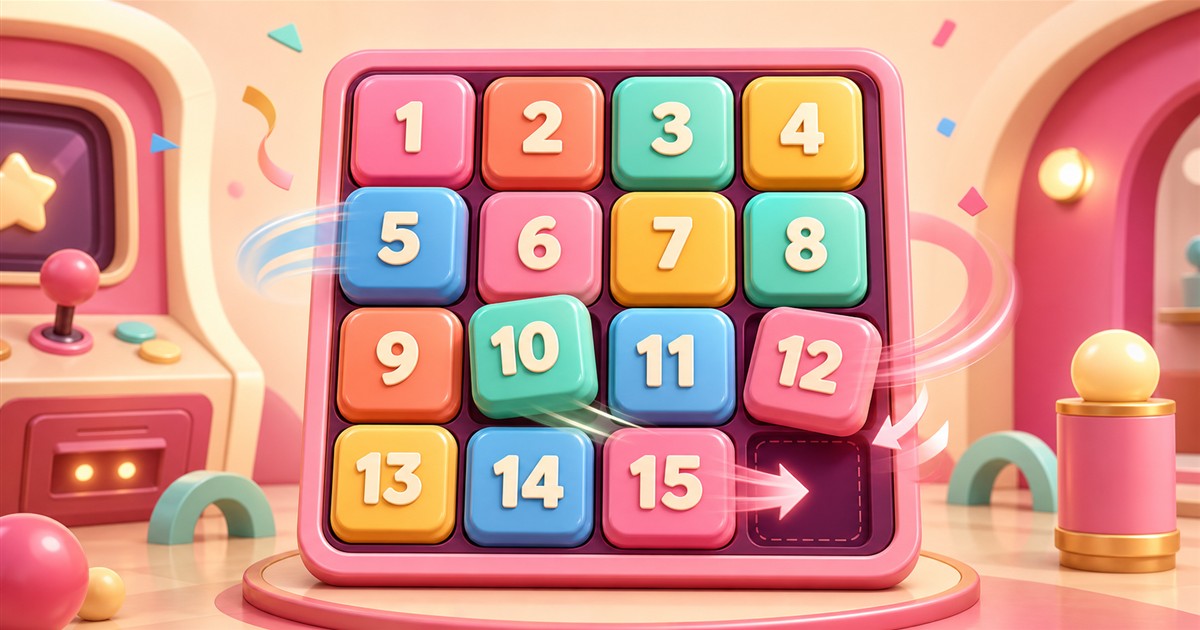
Understand the game before rushing
The puzzle is easiest by layers. Complete the top row, then the next, while keeping manoeuvring space in the unsolved area.
The aim of this guide is to turn that central rule into repeatable decisions. A good result comes from recognising the state of the game, choosing a plan and checking the consequence before acting.
Step-by-step strategy
Work one row or column at a time and avoid touching finished areas.
Think about circling the gap around a tile rather than only moving the tile.
Keep at least a 2×2 area for cycles and final orientation.
Apply one idea at a time. Trying to change speed, route and decision rules simultaneously makes it difficult to understand why a game improved or failed.
Common mistakes and how to correct them
- Trying to move every number directly home without preparing the gap.
- Breaking a complete row to repair one tile.
When one of these situations appears, pause before repeating the same input. Identify the earlier decision that created the problem; the useful correction normally happens one or two moves before the visible failure.
A short practice plan
Practise only the first row until it takes few moves, then add the second.
Use three to five games for the same objective and compare the pattern, not only the best isolated score. Consistency is the clearest sign that the strategy is becoming a habit.
How scoring works
Fewer moves and less time preserve more of the base score.
Leaderboards are useful for comparing results, but first compare against your own personal best and the quality of your decisions.
Frequently asked questions
What is the best first strategy for PinkyDesliza?
Work one row or column at a time and avoid touching finished areas. Think about circling the gap around a tile rather than only moving the tile.
How is the PinkyDesliza score calculated?
Fewer moves and less time preserve more of the base score.
How can I practise PinkyDesliza?
Practise only the first row until it takes few moves, then add the second.