
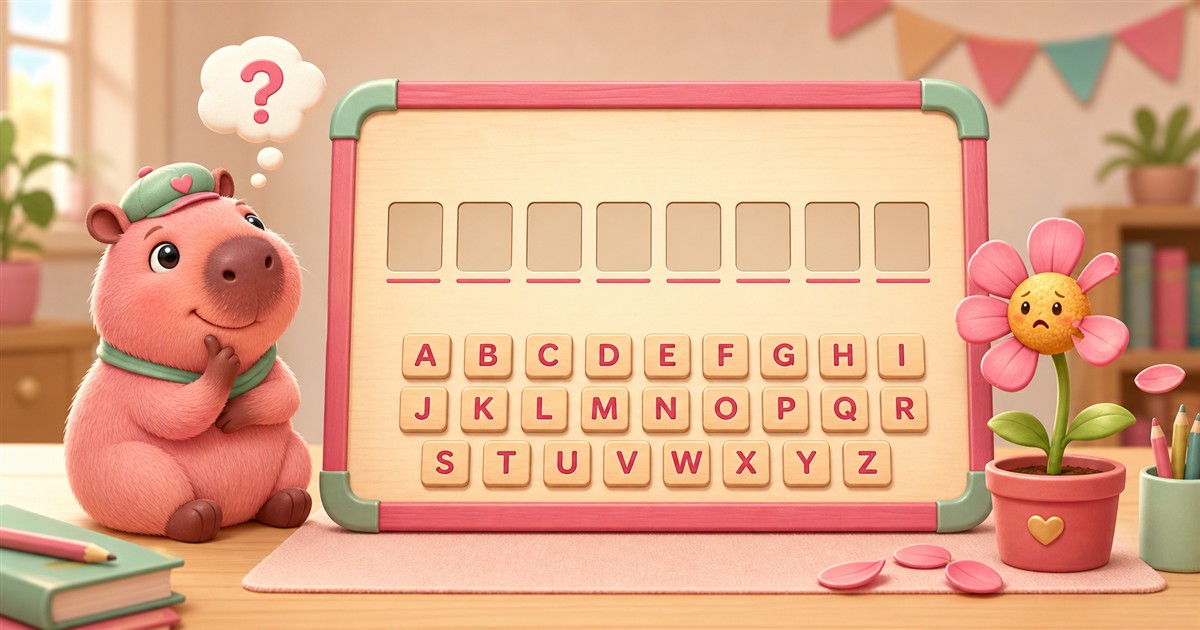
Understand the game before rushing
Every letter should provide information. Common vowels and consonants expose structure, while length and repetitions suggest endings and word families.
The aim of this guide is to turn that central rule into repeatable decisions. A good result comes from recognising the state of the game, choosing a plan and checking the consequence before acting.
Step-by-step strategy
Try frequent vowels before unusual consonants.
Read gaps as prefixes, endings and possible double letters.
Use excluded letters to remove whole words, not only positions.
Apply one idea at a time. Trying to change speed, route and decision rules simultaneously makes it difficult to understand why a game improved or failed.
Common mistakes and how to correct them
- Choosing rare letters early without a clue.
- Forgetting that one letter may appear several times.
When one of these situations appears, pause before repeating the same input. Identify the earlier decision that created the problem; the useful correction normally happens one or two moves before the visible failure.
A short practice plan
After a loss, identify the moment when the visible pattern was already recognisable.
Use three to five games for the same objective and compare the pattern, not only the best isolated score. Consistency is the clearest sign that the strategy is becoming a habit.
How scoring works
Preserving petals and solving sooner increases the score.
Leaderboards are useful for comparing results, but first compare against your own personal best and the quality of your decisions.
Frequently asked questions
What is the best first strategy for PinkyAhorcado?
Try frequent vowels before unusual consonants. Read gaps as prefixes, endings and possible double letters.
How is the PinkyAhorcado score calculated?
Preserving petals and solving sooner increases the score.
How can I practise PinkyAhorcado?
After a loss, identify the moment when the visible pattern was already recognisable.